Showing posts with label Bede James Smith 1909-1965. Show all posts

Tuesday, January 12, 2021

My third family history book


Amidst  all the chaos of 2020 I still managed to get my family history book about Dad published: "Between maple leaf and wattle: Bede's story". 

Special love and thanks to everyone who helped me along the way. It took about three years to write and self-publish. I'm selling copies for A$15 plus postage. Contact me via this blog if you are interested in purchasing a copy.

Monday, December 10, 2018

Story synopsis

Bede (left) with friend, possibly taken in Toronto

My story about my father is nearing completion. Here's a synopsis of the story which I hope will help me hone in on a title for the book.

The year is 1939. Australia is on the brink of war. Bede Smith, an talented young dentist from country New South Wales, has his own dreams. He hopes to travel to Canada to take a postgraduate degree. En route, several days into the Pacific crossing, war is declared, throwing his plans into disarray. Not knowing how long the conflict will last, he continues on to Toronto. There, he falls in love with Marg Baggs, a Canadian. He graduates with a Doctorate of Dentistry and marries Marg in Toronto. They return from their honeymoon to the news that Japan has bombed Pearl Harbour. Feeling duty bound, Bede enlists with the Canadian Army and starts military training. Marg is six-months pregnant when Bede is sent to the wilds of northern Ontario to serve the harsh winter at an army prisoner-of-war camp. Their first child, Pat, is just six months old when Bede is posted to England to prepare for combat. While there, he is involved in a motor vehicle accident – hit by a truck. He recovers in time for the invasion of Europe. In August 1944, Bede lands with the Canadian Fourth Armoured Division on Juno Beach in Normandy. The Canadians advance north through the muddy, wet autumn into the brutal winter of 1944-45. Bede serves with a field ambulance team, treating the wounded. He encounters famine and devastation in Belgium and the Netherlands. He just wants to survive to make it home to his wife and daughter. After five and a half years of war, the Allies finally achieve victory in Europe in May, 1945. However, Australia is still at war with Japan, so Bede volunteers for the Pacific. Demobilised, he returns to Canada and is reunited with Marg and Pat. He is training for jungle combat when the Hiroshima bomb is dropped and Japan surrenders.

After the war, Bede brings his young family home to Australia and starts a dental practice in Sydney. He has two more daughters and settles into family life. Marg takes the girls on a long holiday to Canada, but he has to stay back to attend to his patients. Over time, work becomes all-consuming, with the daily commute into the city, leaving no time for holidays. His life is out of balance. With his part-time position teaching young dentistry students Bede realises he can devote his energies to teaching. A position comes up at the Perth Dental Hospital, on the other side of the country, prompting a decision to sell up and leave Sydney.

Bede moves the family to Perth. At the age of 52, he has a new lease on life. Now working regular hours, he has free time to study an arts degree and develop his creative side. He takes the family on a long road trip across the country to see his beloved Australian cricket team play the Ashes Test match in Sydney in 1963. On the way there, he stops in Leeton, where his parents were pioneer settlers. Once back in Perth, all seems rosy. But time is running out for Bede.


Friday, October 5, 2018

Photo essay image nine

Captain Bede James Smith Image Nine, final image
When I visit the Garden of Remembrance in Perth, I'm reminded of the sacrifices of  Bede, and all those who put their personal lives and dreams on hold to serve their country. Even in death, they fall into line, united.

Photo essay image eight


Captain Bede James Smith Image Eight
A lone Canadian maple leaf on a plaque in Perth commemorates the military service of Captain B J Smith.  After the war, Bede brought his wife and daughter home to Australia. They had two more children and raised a family.  His final years were spent teaching dentistry at the Perth Dental Hospital.

Thursday, October 4, 2018

Photo essay image seven

Captain Bede James Smith Image Seven
In 2003, I was helping my mother sort through her books, when I came across this volume of poetry. ‘That was your Dad's,’ she said. ‘He had it with him all through the war in Europe.’ Now, I can just imagine him, taking solace in the lines of Keats or Longfellow, trying to blot out the insanity of war

Photo essay image six


Captain Bede James Smith Image Six
Bede landed  in Normandy  with the Canadian Fourth Armoured Division in August, 1944. They faced a formidable German defensive wall of barbed wire, metal and concrete bunkers. Later, after the Victory in Europe, Bede returned to the area and photographed the Atlantic Wall.


Saturday, September 22, 2018

Photo essay image five

Captain Bede James Smith Image Five
In September 1943, Bede was posted to England to prepare for the Allied invasion of Europe. He’s seated here (middle left), relaxing on a sunny day with his mates in the medical team. These men will be sharing tough times ahead, treating the wounded, working in field hospitals close to the front.

Photo essay image four

Captain Bede James Smith Image Four
But the Army must have taken pity. Marg was pregnant now. Bede returned to Toronto in time for the birth of their first child in 1943.

Friday, September 21, 2018

Photo essay image three


Captain Bede James Smith Image Three
After enlisting, Bede was posted to the frozen north of Canada, where the snow piled high and foot-long icicles hung down from the military huts.

Photo essay image two

Captain Bede James Smith Image Two

Bede died in 1965 of a war-related illness, just after we’d moved from Sydney to Perth. He never discussed his military service with me. In later years, my mother told me what she knew. I’ve pieced together his life as a soldier, using military records, photos and objects.

Photo essay unit UTAS Family History

I recently completed another unit in the Diploma of Family History run by the University of Tasmania (UTAS). This one was Photo Essay all about Storytelling through photography: go deeper than a single image.

My final assignment consisted of several images telling a story about my father's life in the Canadian Army during World War Two.

I'll try to reproduce it here. This is the first image with caption below. I'll post the others over several days

Captain Bede James Smith Image 1

My father, Bede James Smith, was on board ship, headed for Canada when the war broke out in 1939. He planned to take a postgraduate course in dentistry, before returning to Australia. But he fell in love with Marg, a Toronto girl, and stayed on, enlisting with the Canadian Army.

Thursday, February 15, 2018

Northwestern campaign Europe 1945


Bede's photo of the German coastal fortifications along the Atlantic sea wall, 1945

The piece below is a first draft of a scene from my book about the life of Bede Smith

Oldenburg, Germany, May 1945  


In early April, the Fourth Division advanced into northwestern Germany. A campaign of targeted bombing by the Allies cleared the way for them to seize the medieval garrison town of Oldenburg. Meanwhile, less than 300 miles to the northeast, in a labyrinth of tunnels beneath the streets of Berlin, the Nazi leadership imploded, and on the 30th of April Hitler put a gun to his head.

Events moved swiftly towards Germany's surrender, until the guns fell silent on the 5th of May. Bede was 10 miles from Oldenburg when the news came through of Victory in Europe (VE), and the celebrations began. For him, it had been 276 long days since he'd set foot on the four-mile stretch of grey sand in Normandy.

Several days after VE Day, Bede entered the smoke haze of the officers' mess, the notes of Lili Marlene still ringing in his head from the previous night's entertainment. He wandered over to the notice board and stood, arms folded, scanning the announcements. One flyer outlined the three options available post-VE: soldiers could remain in Europe in the Army of Occupation, volunteer for the Canadian Pacific Force, or apply for a discharge. While Bede was examining the fine print, a separate headline suddenly caught his attention – "Australians Land in Borneo." He adjusted the glasses on his nose and bent lower to read the details. The news item reported a military landing at Tarakan, an insignificant island near Borneo, where the Japanese were still dug in. His middle brother Noel would be there with the Australian Eighth Division. And younger brother Kevin, as far as he knew, was serving in the Solomon Islands. For them, the ordeal continued.

Bede's thoughts were interrupted by a burst of raucous laughter coming from a corner-table in the mess. Despite the sore heads from days of celebration, nothing daunted their spirits. He sauntered over to join the group. The men had copies of the Canadian Forces newspaper, The Maple Leaf, spread out on the table.

'Have you seen this?' his colleague said, holding up the front cover of The Maple Leaf Victory edition. One word filled the full length of the front page – "KAPUT."

'Yes,' Bede laughed. 'The cover's a beaut!' He pulled out a chair and sat down to join the men.

'What else have you found out?' asked Bede
'Some more information about volunteering for the Pacific.'
'You going to volunteer?' Bede asked.
'I'm not sure yet. Are you?'
Bede hesitated. 'I haven't decided. No one can say we haven't done our bit.'
'You've got a wife and child at home. You're off the hook, so to speak.'
'That's true,' Bede said. 'Still, the job's only half done.'

His colleague reached into his uniform pocket, tapped out a few cigarettes and offered them around the table. Bede reached over for one and dug into his pocket for a match.

'Some of us are applying for leave,' his colleague said. 'Going to try and see Paris while we can.'
Bede's eyes brightened. 'That sounds terrific!'

He took a short puff on his cigarette. He'd need to make his decision about the Pacific soon. How would Marg react if he volunteered? All this time in the Europe campaign amounted to a 20-month separation from his family. He'd missed out on Pat's first birthday, and her second birthday. His daughter wouldn't know him when he returned home.

Bede worried about his parents in Sydney who had endured the last five years with fortitude. James and Alice Smith had three sons in the military. As well as Bede, their middle son Noel had served in the North African campaign and was now in Borneo. Youngest son Kevin was a pharmacist with 17th Field ambulance in New Guinea and the Solomon Islands. Their daughter Nora worked for the government in Canberra, leaving youngest child Joan (Kevin's twin) as the only one at home.

Towards the end of May, Bede's Division relocated south to Almelo, a town in the eastern Netherlands, where they helped distribute food to the starving population. For the Dutch, after the famine and the flooding of parts of their country, the peace was sweet indeed. At a victory parade in The Hague on the 21st of May, Queen Wilhelmina was welcomed back from exile. Dutch red, white and blue flags flapped in the breeze, and the Canadians were hailed as heroes.

After breakfast on the 25th of May, Bede marched across the quadrangle and joined a queue of soldiers filing across the barracks' yard in Almelo. He stood with the morning sun warming his back, as the line inched slowly towards the entrance to a large canvas tent. Behind the perimeter fence, a flock of starlings roosting in a tree chirped loudly, reaching a celebratory crescendo.

When Bede reached the head of the queue, he paused at the entrance to wait his turn. A dozen officers were lined up in a row inside the tent, seated at makeshift tables, each with a pile of papers in front of him. The pug-faced lieutenant at the next available post looked up, raised his hand and summoned him forward. Bede sat opposite the lieutenant and handed over his completed questionnaire.

'I'm volunteering for the Pacific,' Bede said, confirming his intentions.
'Good to hear, Captain,' he said. 'We're short of dentists.'
'So I'll be in the Sixth Infantry?'
'Correct. All volunteers from Europe will be assigned to the Sixth.'
'What happens next?' Bede said.
'You'll be demobbed and sent back to Canada. Then you'll start training for jungle warfare. Very different from what you've been through here.'
'Yes. I have an inkling.' It was not a welcome prospect either – the heat, the rugged terrain, the tropical diseases.
'So, how long before we sail?'
'It could be a while yet, Captain. Word is, they're having trouble locating enough carriers to ship you guys back across the Atlantic.'

Bede's face broke into a broad smile, buoyed by the news. Chances were he'd be in Europe a while longer – time for a trip to Paris.

More than 60,000 volunteered for the Canadian Pacific Force. Bede spent another six weeks in Europe and visited Paris. He also inspected the remains of the massive German fortifications along the Atlantic Sea Wall. The beaches were still covered in barbed wire and discarded military hardware and the once palatial seaside hotels remained boarded up.

Bede sailed back to Canada, on the troopship SS Pasteur and disembarked in Halifax on the 7th of July, 1945. There was much talk among the soldiers on board as to how much longer Japan could hold out. He prayed that this next stage of combat could be averted.

Wednesday, January 24, 2018

A stranger in town

Henry Lawson in 1900. Portrait by John Longstaff in the Art Gallery of NSW collection
A stranger in town

In the early days, Leeton was accustomed to welcoming outsiders. But one stranger who arrived in the district in 1916, attracted particular attention.

My father Bede was only seven at the time. He and his mother Alice were on the main street of town, when a curious disheveled man approached from the opposite direction. He was tall, thin and stooped over a cane. His coat hung loosely on his back and a baggy felt hat covered his head. A drooping, handlebar moustache extended out beyond his jaw line.

'Mum,' said Bede. 'Look at that man's huge whiskers!'
'Sssht, Bede. Don't stare.'

Bede's eyes locked onto the stranger's penetrating gaze. A pungent cloud of tobacco smoke enveloped them as he passed. Alice remember the man from her home town of Gulgong, but he didn't recognise Alice.

'Son, that's the famous author, Henry Lawson. He lives in a farmhouse by the river, down on the Daalbata Road.' Bede turned to look back at the faltering figure receding down the dirt road.

Henry Lawson's friends from Sydney had helped him relocate to Leeton, a dry town, where he could get off the grog and pick up the pen again. Henry stayed two years in Leeton from 1916 to 1917. Among the orange groves by the Murrumbidgee River, his writing bore fruit, producing important new works: Leeton Town and A Letter from Leeton.

Saturday, January 13, 2018

Bede in the Canadian Army 1943

Capt Bede Smith, middle row seated on the left. Photo probably taken in the UK in 1943 or 1944


 The piece below is a first draft of a scene from my book about the life of Bede Smith

*********************************
Bound for Europe, 1943 


On 5 September 1943, Bede left the army transit camp in Windsor, Ontario and travelled by train to Halifax, where a carrier waited to transport the Canadian Fourth Armoured Division across the Atlantic. The SS Queen Elizabeth, had been stripped of its luxury fittings and converted into a troop ship. Repainted battleship grey, the modern ocean liner ran the Atlantic at high speed, zig-zagging to avoid encounters with enemy warships and U-boats. There were 13,000 personnel on board for the crossing. With so many troops, all needing to be berthed and fed, the operation was handled with military precision. Bede, like all the others, wore a coloured label indicating in which zone he was berthed. The ship's dining room held 2,000 and meals were served around the clock. No sooner had the last breakfast been served, than lunch began. After lunch the queues formed again for the first evening meal.

Six days after leaving Halifax, the ship landed safely in the United Kingdom. The invasion of Europe was imminent, but no one knew exactly when or where it would occur. All military intelligence was shrouded in secrecy. As it turned out, the Fourth Division would remain in the UK for another 10 months, undergoing rigorous training in an atmosphere of mounting tension.

Upon their arrival in Southampton, the Canadians were transported to a busy military camp in the town of Bordon, East Hampshire in the south of England. The once quiet country roads around Bordon growled with the flow of military vehicles coming and going. Situated in a picturesque landscape of rolling hills and lush green pastures, Bordon offered the troops some recreational opportunities off-base. Whenever he had the chance, Bede took a pass which allowed him to walk into the local town.

More than a month after arriving in Bordon, Bede was returning to barracks by foot along a winding country road. It was harvest time and the haystacks, piled high in the stubbled fields, were touched bronze by the setting sun. In the calm of the late afternoon, the only sound was his own footfall and the plaintive bleating of a lamb. Bede stopped along the road to inspect a flock of black-faced sheep curiously eyeing him from behind the hedgerow. Just then, true to form, a soft drizzle began to fall. The road became shiny and slick with oil residue – time to hurry back to barracks. He quickened his pace.

All of a sudden, came a loud rumble from behind. A vehicle bore down on him. There was a screech of brakes. Bede had no time to react before a truck loomed up and flung him side-ways into the ditch. He hit the ground with a thud, doubling over in pain.

A few yards up ahead the Bedford truck pulled over, its engine still running. A cloud of acrid smoke wafted back and Bede felt himself starting to retch. The driver leapt down from the truck cabin and ran back to where Bede sat dazed on the ground.

'Bloody hell. Sorry, mate. I didn't see you. That bend in the road. Are you OK?'
Bede looked down. The wool of his khaki army jacket was torn at the elbow. He tried to move and sit up, but winced in pain.
'Damn. It's my arm,' Bede said, a sharp tone to his voice.
His hand and arm had taken the full brunt of the fall. Blood congealed around a wound on his hand which was dirty with grit and gravel.
Bede tried to flex his hand.
'Ouch! Christ!'

The truck driver moved in closer. He was a pale, freckled young lad, with a cigarette hanging from his lower lip. He stared down at Bede and flicked his cigarette on the ground.
'Blimey. You're as white as a sheet.'
Bede sat up and moved his arm and shoulder again.
'I hope it's not broken,' he said, trying to remain civil.

Bede felt like he'd done ten rounds in the boxing ring and was down for the count. Finally he pulled himself up to his full height, shook himself off and straightened his uniform. The pants were soaked through from the muddy ditch.

At this point the driver, observing his rank, started up again.
'I'm dreadfully sorry, Captain.'
'Look. I'm OK.' This lad was starting to annoy him now.
'I'll take you to Bordon Camp.'
'That would make sense,' Bede said, a slight tone of sarcasm in his voice.

In the dwindling light they drove back to the army base. The driver attempted to make conversation, but Bede was occupied with his own thoughts. The injury weighed heavily on him. Some years previously, he had hurt himself playing cricket. Since then, he'd been plainly aware that his hands were his lifeline. Any accident could derail his future career in dentistry. And he hadn't even seen action in this war. He tried to put such bleak thoughts aside and remain calm.

It was dark by the time they saw the lights of Bordon Camp and drove through the security gates. Bede directed the driver to the front door of the hospital, where he hauled himself down from the truck and went indoors to find the duty doctor.


Tuesday, July 4, 2017

The Second Eleven


Photo of Saint Joseph's College in 1904, courtesy of the College archives


A version of this piece was posted as one of my assignments in the University of Tasmania's unit in Family History Writing. The idea is to write "flash fiction", to convey an scene in less than 250 words. This is an image of my father's first day at school at Saint Joseph's College in 1923. The 1904 photo is of the main school building which was taken 19 years before Bede's time.
...............................................................................

Alice Smith and Bede had travelled up to Sydney the previous week, taking the bone-shaking slow train from Wagga.


Now, outside the school, Bede gazed up at the towering sandstone building that would be his home for the next five years. His new uniform, half a size too big, felt heavy on his back.


When they entered the headmaster's office, Brother O'Meara was busy signing papers but he stood up and reached over the desk to shake Bede's hand. The Brother's fingers were stained dark blue and Bede caught the faint metallic smell of ink. Brother O'Meara spoke with a lilting Irish accent and began to explain the orientation procedures.


'We're always happy to welcome the country boys, Mrs Smith. I've assigned Flanagan here to show you both around. God bless.'

'Thank you, Brother.'

The boy Flanagan took them down a dimly lit corridor that led towards the dorms. He stopped half way along, to look out across the lush green lawn.

'Do you play cricket, Smith?'

A broad smile stretched across Bede's fair face and his blue eyes lit up.

'I certainly do.'

'Batsman or bowler?' Flanagan asked.

'I'm an all rounder. My Dad's been helping me with my off-breaks, at home, in Leeton.'

'Excellent! We're preparing boys for the Second Eleven. Come on, I'll show you the playing fields.'


Through the stone archway, in the distance, there came the flash of a figure in white running in, followed by the faint pock sound of the ball.


Tuesday, March 28, 2017

Writing the Family History Scene

I'm currently enrolled in an online family history writing course, Writing the Family History Scene, run by Lynn Palermo, The Armchair Genealogist

Our first assignment is to write a brief summary of a scene we plan to write, explaining our main protagonist and ancestor.

Here is the scene I plan to write with a brief lead in, explaining the what happened before the scene.

PREVIOUSLY ...

The protagonist is Bede, a 29 year old Australian dentist and bachelor, who has recently arrived in Toronto, Canada. Bede has travelled there to take a postgraduate Doctorate of Dentistry degree at the University of Toronto along with several other Australians, taking the same course. He intends to return to Australia after his one-year course of studies, to resume his career as a dentist. However in the previous month, September 1939, on the ship crossing the Pacific they received news that war had broken out.

SCENE title: In the mood
The scene takes place at a party on campus of the University of Toronto in early October 1939. The party is being held to welcome the new students. Bede is in the company of an Australian dentist friend Denny, and the two crack a few jokes and enjoy the local rye whiskey. There's a Canadian girl at the party, Marjorie, a dental nurse, who has brought along some of her girlfriends. Across the room, Bede recognises Marjorie talking to an attractive young woman and he decides go and introduce himself. Marjorie's friend is named Marg. The band starts playing a Glenn Miller big band number, In the mood and Bede asks Marg to dance. They share some jokes and he's quite impressed with her and wants to see her again. Not only is Marg attractive, but she's smart and funny. Bede is a born-leader, used to being in control. He's the oldest son in the family of five and everyone looks up to him, but Marg is able to match him in wit. Bede has left behind a girlfriend in Australia, but with the war on anything could happen. The scene ends with Bede chatting to Denny again. He doesn't know it yet, but there are several areas of potential conflict looming with Marg: social status (Marg is from a well-to-do family), different national allegiances and different religion.


And here's a happy photo of Bede and his new wife Marg, taken sometime in early 1943, when she was expecting their first child.

Bede and Marg Smith in Ontario in 1943

Tuesday, February 28, 2017

Match of the day

Match of the day

The Sun has billed it as the match of the day – University, the underdogs, facing off against Saint George.

In my mind's eye, I catch a glimpse of my father Bede on that morning in February 1932. He is walking from Hurtsville Station, down the frangipani streets, past the new red and brick tile houses. With his canvas bag slung over his shoulder there's a spring in his step, as he makes his way towards oval.

Thousands line the streets leading up to the oval; while inside, the ground is full to bursting point. Young fans clutching autograph books hang like monkeys on the fence.

In the humid confines of the change room, Bede has started to sweat. His team mate, Tom Parsonage, paces up and down.

'How about that crowd!'

'They're not here to watch us, mate,' Bede says. 'You can be sure of that.'

Saint George wins the toss and elects to bat and are off to a rapid start. On the first fall of wicket, when the number three batsman appears, the crowd erupts. Two young boys clamber over the perimeter fence. A police officer intervenes to stop them from grabbing Bradman by the shirt.

Bede's bowling is not up to his usual standard and he doesn't manage to dislodge Bradman, who eventually falls leg-before-wicket to Parsonage for 50. By the end of the day Saint George has amassed a total of 304 and, in the dwindling light, Bede and Tom Parsonage stride to the crease, to open the batting for University. The match will continue on the following weekend, when University will try to equal Saint George's batting total.

There were 8000 people at Hurstville for that Saturday's cricket match. My father had to content himself with the hope that next season he might have another crack at taking Bradman's wicket.


Trove Reference
Corbett, C. (28 February 1932 ). Bradman's crowd, The Sun, p. 35.

Thursday, February 23, 2017

Hunger winter

Hunger Winter The Canadian Army slogged north through the harsh winter of 1944-5. Before them, the Germans had fled, leaving behind a population, reduced to squatting like rats in the rubble. My father Bede was with a field ambulance team in late 1944, when they approached a bombed-out town in northern Belgium. One of his jobs was to inspect the town and establish if any medical or other supplies had been left behind by the enemy. Snow had piled up beside the road leading into the town and two ragged bow-legged children were scrabbling in the rubbish, fighting over an apple core. Bede recoiled at the sight. The army trucks growled to a halt in the centre of town and Bede and a fellow officer jumped off. As they entered a side street, they caught a nasty whiff of stale urine, but the town seemed deserted. Half-way along, they found a boarded-up shop, displaying a sign that read: "niets in Winkel, alles in Kelder". The other officer looked at Bede. 'What does that say?' 'It means something like – "there's nothing in the shop, it's all in the cellar".' Bede pushed open the front door. 'Let's take a look.' Down a wooden ladder, they entered a basement where a frail old woman stood in the gloom. When she recognised them as Canadians, her face brightened. She pointed to a couple of dried-up potatoes on a shelf. Bede shook his head. 'Nee, danke.' The woman gestured, putting two fingers to her lips and blowing out. Bede rifled through his pockets, handed her a cigarette from his packet and bent over to light it for her. Their eyes connected and she gave him a wide grin, showing a row of nicotine-stained teeth. They nodded a farewell and started to back out towards the ladder. Outside, the two hollowed-out children they'd seen earlier were standing in wait. They must have had followed the convoy into town. Until the Army set up camp, they had nothing to give them. In the years to come, that time in Belgium and Holland would be referred to as the "hunger winter". My father never talked much about what he had witnessed there. Instead, he would berate us when we refused to eat our food and remind us of the starving children in war torn Europe.

Thursday, February 9, 2017

A description of Bede

Day 8 in the Family History Writing Challenge is looking at using the sense of sight to describe an ancestor.

The exercise

"Sit down and for 10 minutes write a description of your ancestor that is your viewpoint ancestor for February.  Write as much as you can interesting descriptive phrases or full sentences if you like. Use only sight as your sense to describe him or her. Now don’t go dumping all of this into one big paragraph into your story.  Save it. And when the time is right insert bits and bobs into your story at just the right moment."

This description of my father is based on photos of him as a young man and my memories of him when he was middle aged. He died when I was a teenager.

My description

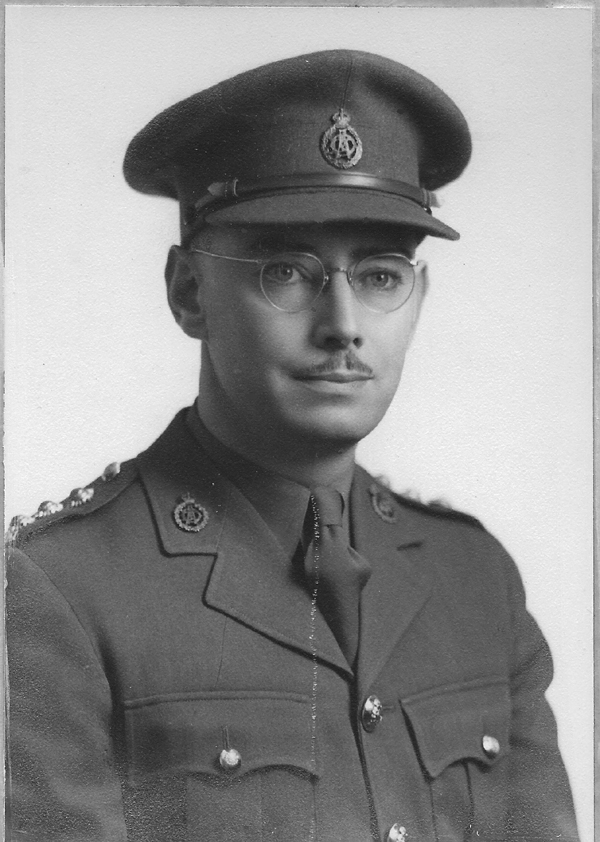
With his broad smile, full lips and straight, debonair moustache he had a Clark Gable look about him. The black hair was thick on top and cut short at the sides, displaying his prominent ears. There was something about the strong cut of the jaw, the pale skin and dark blue eyes that hinted of his Irish heritage. His smile revealed a straight row of teeth and he took particular care to keep them clean.
In his rugby team photo he stands erect, arms folded, smiling, looking straight at the camera, as though ready to pounce. A lifetime of playing sport gave him the easy agility of an athlete, despite his imposing 6 feet. He exuded the confidence of the first-born in the family, like a leader of the tribe. The rest of the family all looked up to him and, if there was dissension in the ranks, I certainly never heard about it.

Saturday, January 7, 2017

Family History Writing Challenge for 2017

The Family History Writing Challenge is on again for 2017. This is run during the month of February 2017 by Lynn Palermo The Armchair Genealogist
You can enrol here.

This year I am going to write about my father, Bede Smith. 

Captain Bede Smith 1942

 Here's a brief synopsis of his life:


Bede Smith was the first in his family to go to university, where he studied dentistry. He captained the University of Sydney cricket team and could have become a full-time cricketer, but the Depression was on, so he took up his profession and worked as a small town dentist in Henty, New South Wales, while saving money to travel to Canada to further his education.  He was on the ocean journey across the Pacific when World War 2 broke out. He continued on to Canada and completed postgraduate studies at the University of Toronto. While in Toronto, he fell in love and married a Canadian girl and had a daughter. As the war continued, he enlisted and fought with the Canadian Army in the Canadian Dental Corps, landing in Normandy and seeing action in Northern Europe. After VE Day he volunteered for the Pacific Force, and returned to Canada to start training for jungle warfare, but peace in the Pacific saved him from that fate. In 1946, he brought his Canadian wife and child to live in Sydney, Australia. He bought a dental practice in Sydney and had two more children. After turning 50, he had a mid-life crisis and decided to change direction. He sold his private practice and moved to Perth, Western Australia to lecture in the Dental Faculty at UWA. In his spare time he enrolled in a Bachelor of Arts Degree, but then fell sick with cancer, and died at age 55.